Growing is Forever from Jesse Rosten on Vimeo.
Wednesday, April 4, 2012

Tuesday, April 3, 2012
Please vote for my organization
Charm City EcoVillage has submitted an entry for the Jumo Individual's Challenge and we need your votes to win!!! Please follow this link to vote!
Monday, March 26, 2012
Planning a Sustainable Wedding in Baltimore
This June, I will be getting married!!! I'm very fortunate to have had the time and resources available to make our event an eco-friendly event. The wedding industry is extremely wasteful, thus having a terrible economic impact.
The problem? Since I was a little girl, before I understood much about environmental impact, I had my dream wedding planned. How do I have the printed invites I've wanted? The extravagant dress? The exuberant reception!?
What does it mean to have a green wedding? No, it's not about wearing
a dress that's literally the color green (embarrassingly enough, more than a few people have asked that)! It's about having the smallest impact on the environment as possible,
while still having a grand celebratory union! For Shane and I, that
means:
(1) Using recycled paper for all our printed invitations and materials; printing the STD cards on postcards to save paper [Wedding Invites: French Paper; Save the Dates: Greener Printer; Shower Invites: Waste Not Paper ]


(2) Holding our reception in a historic building; [bonus: in a building sans A/C, lowering our electricity usage] [Cloisters Castle]
...(2a) Having the ceremony and reception in one place to limit travel emissions!
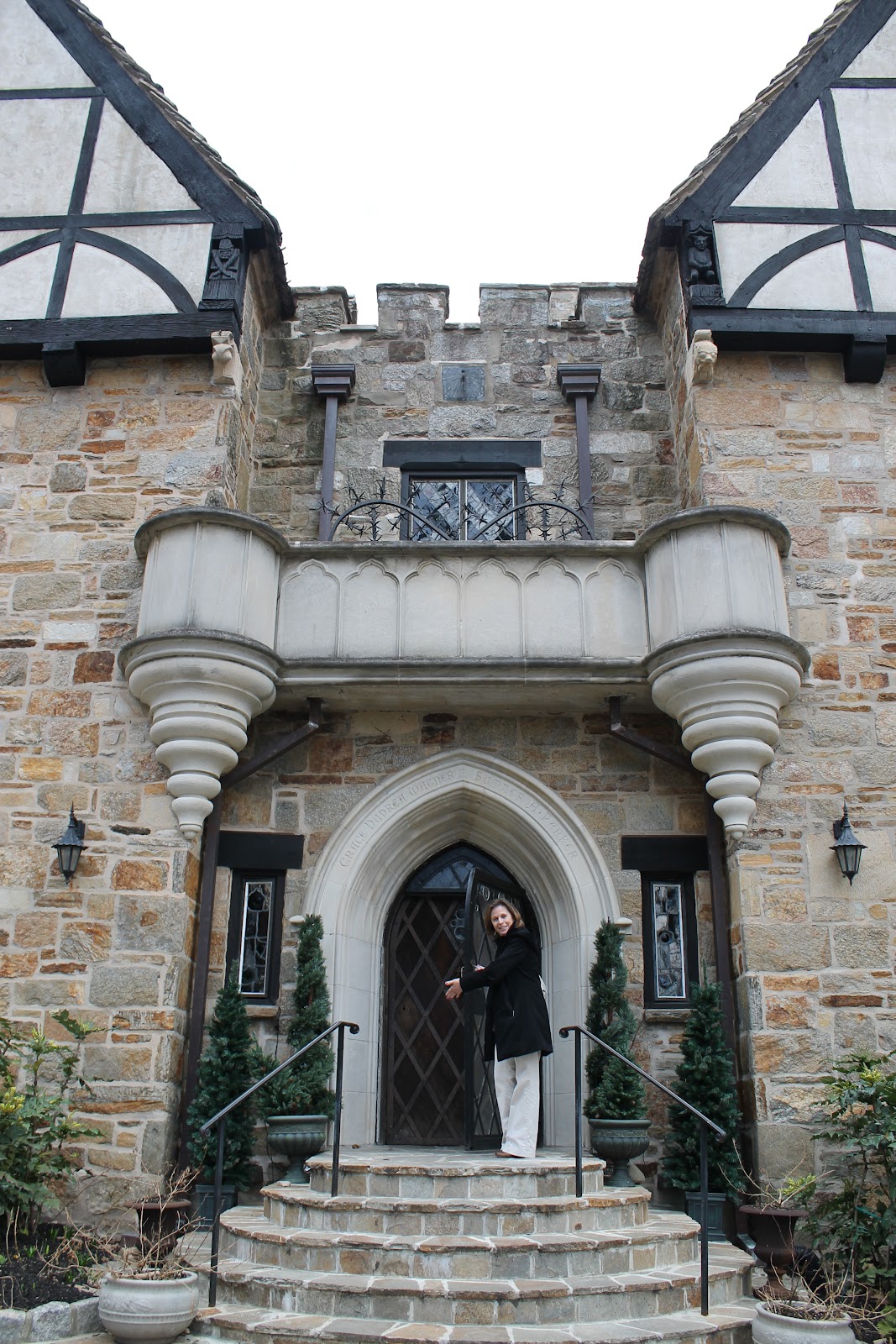
(3) Re-using the materials of mother-of-the-bride's wedding dress (I can't wait to post a photo of the finished dress!)

(4) Letting the bridesmaids choose their own dresses, so as to ensure they get worn again!
(5) Opting for a seasonally inspired, meat-limited menu, and choosing a caterer who is conscious about their food choices and who utilizes many local farmer's products [ Amazing food: check out our caterer: The Pantry Catering!]

(6) Serving our food buffet-style so that our guests have options, plus portion control
(7) Purchasing local, in season flowers for our decorations and bouquets [Local Color Flowers is an amazing company!]
(8) Utilizing a personalized registry, allowing us to suggest organic and eco-friendly products to anyone who might wish to present us with a gift [My Registry + Pristine Planet = eco-friendly gift registry from all of the web's greenest retailers!]
(9) Decorating with recycled or re-used items: antique bottles, burlap coffee bags, etc.
(10) Serving a mix of vegan/non-vegan cupcakes instead of cake, which limits the use of unnecessary serveware
(11) Instead of cheap favors, we will either be planting trees, or offsetting the carbon emissions of the event.


How can you do the same? There are plenty of resources available to you, first, you ought to know what exactly the conventional wedding requires, and how harmful such an event can be. Books like the Green Bride Guide do a wonderful job explaining that. Also, see if there are Green Wedding Showcases near where you live! Last year, I attended the Mid-Atlantic Green Wedding Showcase. I learned about all the local vendors who were socially/environmentally conscious. It was unfortunately cancelled this year, but I would have loved to have gone again!
And then basically, just look online. There's the EcoBeautiful Weddings magazine: a GREAT resource and a ton of fun to look through! When I have more time, I'll do a more educational post on how you can do the same. And if you're interested, check back as I post more about our green wedding!
Thursday, March 22, 2012


Wednesday, March 21, 2012
DIY Cleaning
I promised to post about DIY cleaners, and I will. In the mean time, however, this is a good overview of the main ingredients to stock in your home.
National Geographic, The Green Guide. Green Home Makeover: Cleaning Products
Living Organically
This blog is mainly about two things: My life as a treehugger, and my life as an urban designer. This explains why my posts switch back and forth, focusing at one time on the city in which I live and then another on how I strive to live an eco-friendly, compact life. This particular post, is a quick snippet into some of my "green" habits that are ridiculously easy for anyone to pick up! It all goes back to the bathroom!
Gross! No, not at all. You'll find very little toilet talk in this post- I'll save that for a later time. All I want to do right now is show you some products you can purchase which make bathroom activities environmentally friendly (I promise, one day I'll talk about green cleaning!). These products are: Preserve's toothbrush, Ecover Toilet Bowl cleaner, Biokleen's drain cleaner, Preserve's razor, and castile soap.
 1. Preserve's Toothbrush: What subscriptions do you keep in your bathroom? Time magazine? The Local News? Playboy!? Too personal, sorry. Well I only have one, but it's a different sort of subscription. It's my toothbrush! The handle of the Preserve toothbrush (I've chosen blue) is made from 100% recycled materials, specifically yogurt cups {vegan yogurt!? I wish!}. The bristles, of course, are new. With a subscription, you'll get four toothbrushes (either every 3 months, every 2 months, monthly, or all at once) and in exchange you return your toothbrush via the package in which your new one arrives. You can mail back their store-bought brushes, too, but this is so much easier- and no more forgetting to change your toothbrush! I have the 3 month program, and I love it! Sign up for your own Preserve Toothbrush Subscription!

2. Ecover Toilet Bowl Cleaner: As I mentioned above, I promise to one day write a post on how to clean your home without using harsh chemicals, but today, I have to products I'd like to mention. I use my own homemade toilet bowl cleaner most of the time. When I was living alone, that was perfect, but now that I live with my fiance, the task of cleaning a toilet has become even more dreadful. My solution? Use a store-bought cleaner ever so often, and in between cleans use my homemade recipe. I tried a few different products before I settled on this one. A while back, when my mom and I lived together, she bought Clorox's Green Works products. They worked fine, but I just don't trust Clorox to be environmentally friendly. It is a legitimate cleaner, it bears the Sierra Club mark of approval, and it contains no bleach, but it wasn't sold in health-food stores, and that did it for me. After testing a few more products, I settled on Ecover's product. It's eco-claims sold me: "Plant-based ingredients — not based on petrochemical ingredients; no chemical residue; optimum level of biodegradability (far exceeds legislative requirements); safe for river and marine life; no animal testing" That list of "eco-claims" comes from Grist.org's review of toilet cleaners, and they are awesome selling points. If you check out Grist's list, you'll see their only complaints were the scent and the fact that the liquid was clear. To be honest, the scent is refreshing (they say pine but I think it's more like peppermint) and the fact that it's not an eerie blue color reminds me that there are no scary ingredients in this product! I give it two thumbs up! Do your own research at the Ecover website!
3. Biokleen Drain Care: Okay, again, cleaning recipes come later. I do want to point out that you can unclog your drains using household ingredients, but that doesn't always work as awesome as I'd like it to. So I had to resort to a stronger concoction. Enter Biokleen Drain Care! I've used Seventh Generation, I've used Earth Friendly Products, I've used Mrs. Meyer's (side note- is Mrs. Meyer's actually eco-friendly? I need to do more research)....non have worked that great. Biokleen's drain cleaner is good with regular use, but you do have to work at those tough clogs! Still, I recommend it! Here's Biokleen's website for you to look over.
4. Preserve's Razor: Back to the really exciting stuff! Did I mention I love Preserve!? I don't think I did, but they're a great plastics company, for all you plastic lovers out there. For things kitchen and bath related, they've got tons of recycled plastic products for you! This little guy is great. To be honest, it's blades could be better designed, but the fact that it's made of recycled yogurt cups is just terrific!
5. Castile Soap: Last but not least (and there are actually millions of other green bathroom products I could talk about), we have castile soap, specifically, Dr. Bronner's in (my favorite) peppermint scent. As a vegan, I am very pleased to tell you that castile soap, unlike other soaps, is made without animal fats! Who would want to clean with animal fat anyway!? How is this used in the bathroom, you ask? Toilet cleaner, counter cleaner, floor cleaner, spray cleaner, body wash, hand soap, shampoo, teeth cleaner...you get where I'm going with this, right? It can be used for practically anything. Thus, I love it. Especially in the bathroom! I have liquid and bar soap forms in my bathroom. Check out all the other awesome products made by Dr. Bronner's.
There are a plethora of environmentally friendly products to use in the bathroom, these are perhaps just my personal top 5! The important thing to remember in the bathroom is that your drains lead somewhere! Imagine all the chemicals and crap (no pun intended!) that escapes through your drains each day- we have to take responsibility for all of that! All that gets washed away ultimately ends up in our rivers and oceans. So from now on, get clean with the cleanest products you can find! From shampoo and soap to toilet and sink scrubs, there's an alternative out there. Find what works for you and stick with it!
Gross! No, not at all. You'll find very little toilet talk in this post- I'll save that for a later time. All I want to do right now is show you some products you can purchase which make bathroom activities environmentally friendly (I promise, one day I'll talk about green cleaning!). These products are: Preserve's toothbrush, Ecover Toilet Bowl cleaner, Biokleen's drain cleaner, Preserve's razor, and castile soap.


2. Ecover Toilet Bowl Cleaner: As I mentioned above, I promise to one day write a post on how to clean your home without using harsh chemicals, but today, I have to products I'd like to mention. I use my own homemade toilet bowl cleaner most of the time. When I was living alone, that was perfect, but now that I live with my fiance, the task of cleaning a toilet has become even more dreadful. My solution? Use a store-bought cleaner ever so often, and in between cleans use my homemade recipe. I tried a few different products before I settled on this one. A while back, when my mom and I lived together, she bought Clorox's Green Works products. They worked fine, but I just don't trust Clorox to be environmentally friendly. It is a legitimate cleaner, it bears the Sierra Club mark of approval, and it contains no bleach, but it wasn't sold in health-food stores, and that did it for me. After testing a few more products, I settled on Ecover's product. It's eco-claims sold me: "Plant-based ingredients — not based on petrochemical ingredients; no chemical residue; optimum level of biodegradability (far exceeds legislative requirements); safe for river and marine life; no animal testing" That list of "eco-claims" comes from Grist.org's review of toilet cleaners, and they are awesome selling points. If you check out Grist's list, you'll see their only complaints were the scent and the fact that the liquid was clear. To be honest, the scent is refreshing (they say pine but I think it's more like peppermint) and the fact that it's not an eerie blue color reminds me that there are no scary ingredients in this product! I give it two thumbs up! Do your own research at the Ecover website!
3. Biokleen Drain Care: Okay, again, cleaning recipes come later. I do want to point out that you can unclog your drains using household ingredients, but that doesn't always work as awesome as I'd like it to. So I had to resort to a stronger concoction. Enter Biokleen Drain Care! I've used Seventh Generation, I've used Earth Friendly Products, I've used Mrs. Meyer's (side note- is Mrs. Meyer's actually eco-friendly? I need to do more research)....non have worked that great. Biokleen's drain cleaner is good with regular use, but you do have to work at those tough clogs! Still, I recommend it! Here's Biokleen's website for you to look over.
4. Preserve's Razor: Back to the really exciting stuff! Did I mention I love Preserve!? I don't think I did, but they're a great plastics company, for all you plastic lovers out there. For things kitchen and bath related, they've got tons of recycled plastic products for you! This little guy is great. To be honest, it's blades could be better designed, but the fact that it's made of recycled yogurt cups is just terrific!
5. Castile Soap: Last but not least (and there are actually millions of other green bathroom products I could talk about), we have castile soap, specifically, Dr. Bronner's in (my favorite) peppermint scent. As a vegan, I am very pleased to tell you that castile soap, unlike other soaps, is made without animal fats! Who would want to clean with animal fat anyway!? How is this used in the bathroom, you ask? Toilet cleaner, counter cleaner, floor cleaner, spray cleaner, body wash, hand soap, shampoo, teeth cleaner...you get where I'm going with this, right? It can be used for practically anything. Thus, I love it. Especially in the bathroom! I have liquid and bar soap forms in my bathroom. Check out all the other awesome products made by Dr. Bronner's.
There are a plethora of environmentally friendly products to use in the bathroom, these are perhaps just my personal top 5! The important thing to remember in the bathroom is that your drains lead somewhere! Imagine all the chemicals and crap (no pun intended!) that escapes through your drains each day- we have to take responsibility for all of that! All that gets washed away ultimately ends up in our rivers and oceans. So from now on, get clean with the cleanest products you can find! From shampoo and soap to toilet and sink scrubs, there's an alternative out there. Find what works for you and stick with it!
Saturday, March 17, 2012
Filling the Void on Howard Street Baltimore
A Study of Emptiness and Finding Purpose Along
Baltimore City’s Historic Corridor

Once a vibrant and
busy destination, Howard Street now functions simply as a means for passage
through, into, and out of Baltimore City. By intimately studying the blocks
between Fayette and Monument Streets, one might catch brief glimpses of the
lively street that once was. Most of what’s left standing today, however, tells
a rather unfortunate story of a neglected and forgotten corridor. Borrowing
from the processes outlined by urban theorists before me, I have used various systems
to evaluate the physical form as well as the expressive essence of Howard
Street. From such vigorous analyses, I have identified a combination of grounds
for explanation as to why the corridor is, or is not, functioning in its
current form.
As a Baltimore
County resident, I often use the light rail line to travel into the city. As it
enters Baltimore’s central neighborhoods, the light rail settles into the
Howard Street right-of-way. In my years of riding, I have developed a sort of fondness
for one stop in particular. At the corner of Howard Street and Centre street,
the light rail drops its passengers off a few blocks west of Mount Vernon, just
south of the Cultural Center, one stop north of Lexington Market, and nearby to
downtown Baltimore. Yet it was never because of this stop’s close proximity to
such amenities that drew me in; it was likely more about the adjacent park, or
perhaps the fact that this particular light rail stop always had a sense of stillness
to it, that I took the opportunity to step off the train. From the intersection
at Monument Street, just north of the Centre Street light rail stop, down to
the next light rail stop on the 100 block at Fayette, Howard Street has a very
distinct character. My study of the corridor encompasses these six blocks, with
heavy focus on the three northernmost blocks from Mulberry to Monument. Systems
of evaluation- such as Kevin Lynch’s visual mapping; Emily Talen’s approach to
transect classification; the Venturi and Scott Brown system of signs and
symbols; and indeed Anne Whiston Spirn’s study of nature within the city- shall
provide an opportunity to peel back the layers of the city to reveal the
fundamental nature of Howard Street.
An Area of Historical Relevance
 |
| Howard Street, Looking North at Lexington; Photo Credit: Baltimore County Public Library Legacy Web |
The department
stores and theaters have since shut down; only the Market continues to operate
today (at 230 years old, it is the longest running market in the world), but fading
signage lingers as a reminder of what once was. The evolution, or perhaps
decline, happened slowly throughout the twentieth century as the corridor was
altered little by little. In the 1930s, even amidst the Great Depression,
Howard street was still a robust, and vibrant destination. Howard Street at
Lexington was, at the time, a major intersection and in 1934, Read’s Drug Store
was constructed on the southeast corner. Twenty-one years later, in 1955, Read’s
would be the site of an early sit-in of the civil rights movement, which has since
given Howard Street profound social significance.[1] Five
years before the well known Greensboro sit-in, a group of Morgan State
University students made a powerful statement when they organized a successful protest
at the Read’s Drug Store lunch counter (Pousson 2011).
 |
| Read's Drug Store on Howard Street; Photo Source: Baltimore Heritage Website |
While Howard
Street was doing well during these years so, too, was the automobile which made
traveling outside the city an efficient alternative. With this convenience, the
new shopping malls were able to flourish. As more and more city residents
traveled to the outskirts of Baltimore to shop in these new malls, Howard
Street became less and less relevant, yet managed to remain economically stable.
In 1942, the Greyhound Bus Terminal was built at Howard and Centre Street (Vandervoort
n.d.).
Howard Street was to be enhanced by a new bus route, a future that was never
realized. This building still stands today and is part of the Maryland
Historical Society’s campus. The Maryland Transit Administration entered the
picture in the 1980s with the introduction of the light rail line. Although it
provided an inexpensive means for residents to travel within and around the
city, there has been a general consensus that the transportation “improvements”
of the light rail have been the main cause of Howard Street’s demise.

The booming activity of old Howard Street may be gone, but the physical
form remains. Many of the buildings which directly front the street retain
architectural details that can so rarely be found on buildings constructed
after the 19th century. Sadly, behind these magnificent facades, the
buildings crumble in disrepair. Like the Mayfair, whose roof collapsed in the
1990s, these buildings sit as abandoned shells, waiting for the next tenant to
come along and embrace their history; but it’s been years since anyone’s seemed
interested. While people have all but forgotten, nature has slowly begun the
process of reclaiming the land upon which these buildings sit. A future similar
to the one explored by author Alan Weisman in his book, The World Without Us,
is developing before our eyes. As human activity continues to neglect the few
blocks surrounding Kernan’s Corner, nature- as I’ll soon explain- finds new
ways to make its presence known.
 Methodology for Deeper Appreciation

Although I have been
to Howard Street many times before, I had never delved so deeply into its story
as I did upon my initial study visit. During this trip, I utilized photo
documentation and visual mapping techniques, in conjunction with notations of
any emotions felt along the way, to document the corridor. The goal was to be
truly within Howard Street’s fabric
as opposed to just passing through it, as too many people often do. Traveling a
total of ten blocks between Martin Luther King Boulevard and Baltimore Street, I
made a point to patronize local establishments and talk to any willing
passerby. The subsequent visit entailed a much more elaborate process of evaluation,
which proved to illustrate very interesting results.
 |
| A Collection of Urban Study Methodologies |
 Very little that
exists on Howard Street is consistent from Monument to Fayette. Street art, however,
is surprisingly abundant along the entire stretch. These images carry heavy
messages, which make them particularly intriguing. As I was studying one of the
first pieces I encountered, I paused photographing so as to greet a passerby.
The man said hello, continued walking to the opposite end of the block, then reversed
course with extreme purpose. He marched back to where I stood to ask me why I would
photograph this image which he didn’t find to be especially alluring. I’m very glad
he decided to speak with me, for our long discussion of art proved quite
enjoyable and as testimony of art’s power to bring strangers together. Art, much
like the iconography and symbols discussed by Robert Venturi, Denise Scott
Brown, and Steven Izenour, punctuates the public space of the corridor as a
response to the everyday life of the city. As Venturi, Scott Brown and Izenour
had done with the signage and graphic elements of the Las Vegas strip, I photographed
and cataloged the street art and faded iconography along Howard Street. Plywood
covered storefronts proved to be the most inviting canvases for street art, as
the highest percentage of art was found on the blocks with the most vacant
buildings. Whether it altered the environment for better or worse seems to be a
matter of personal preference, as I noted from my conversation with the passerby,
but its presence is certainly noticed.
Very little that
exists on Howard Street is consistent from Monument to Fayette. Street art, however,
is surprisingly abundant along the entire stretch. These images carry heavy
messages, which make them particularly intriguing. As I was studying one of the
first pieces I encountered, I paused photographing so as to greet a passerby.
The man said hello, continued walking to the opposite end of the block, then reversed
course with extreme purpose. He marched back to where I stood to ask me why I would
photograph this image which he didn’t find to be especially alluring. I’m very glad
he decided to speak with me, for our long discussion of art proved quite
enjoyable and as testimony of art’s power to bring strangers together. Art, much
like the iconography and symbols discussed by Robert Venturi, Denise Scott
Brown, and Steven Izenour, punctuates the public space of the corridor as a
response to the everyday life of the city. As Venturi, Scott Brown and Izenour
had done with the signage and graphic elements of the Las Vegas strip, I photographed
and cataloged the street art and faded iconography along Howard Street. Plywood
covered storefronts proved to be the most inviting canvases for street art, as
the highest percentage of art was found on the blocks with the most vacant
buildings. Whether it altered the environment for better or worse seems to be a
matter of personal preference, as I noted from my conversation with the passerby,
but its presence is certainly noticed. A most exciting
study of Howard Street came from my consideration of nature in the city. My
evaluation was based on Anne Whiston Spirn’s belief that nature helps to
determine how meaningful a place may be. In my investigation, I paid particular
attention to nature as it specifically pertains to plant life. When observing an
open space inventory of Baltimore City as a whole, patches of green speckle the
map save for the area within which Howard Street rests (Baltimore
2010).
The only green spaces along this portion of the road are Howard’s Park,
directly across from the old Greyhound Terminal[2]. Outside
of Howard’s Park, nature has been left to fend for itself. Where street trees
once stood, empty wells mark the graves of
fallen allies. These empty tree wells have sometimes been filled with asphalt,
as if to ensure anything that lives can never grow there again. Occasionally,
perhaps in an attempt to conceal this atrocious behavior, flower pots have been
set on top of these asphalt-filled, empty tree wells. My investigation included
counting the total number of tree wells on each block, and how many of them
were actually filled with street trees. I discovered that the blocks with the
most vacant buildings were also those with the fewest occupied tree wells. I
determined that 17% of the tree wells on the 400 block from Franklin to
Mulberry were empty, and an astonishing 62% of the tree wells between Mulberry
and Saratoga were barren. In addition to street trees (or lack thereof), I
identified any instance where nature proved more resourceful than humans had accounted
for. It is not the property-owners of the northern blocks that have claimed
ownership of the land, it’s the land itself that has declared possession. In
these warm March days, hearty and verdant weeds have already begun to seep from
the cracks in the pavement. Even the asphalt filled wells couldn’t keep nature
from persevering: mature trees had found their way into abandoned buildings and
now escape through gaps in the boarded-up windows and out onto rooftops. The
six blocks between Monument and Fayette Streets account for a total length of
approximately 2,513 feet. Along this stretch of Howard Street, there is an
average of about one tree for every 40 feet. Not nearly enough, in my personal
opinion.
A most exciting
study of Howard Street came from my consideration of nature in the city. My
evaluation was based on Anne Whiston Spirn’s belief that nature helps to
determine how meaningful a place may be. In my investigation, I paid particular
attention to nature as it specifically pertains to plant life. When observing an
open space inventory of Baltimore City as a whole, patches of green speckle the
map save for the area within which Howard Street rests (Baltimore
2010).
The only green spaces along this portion of the road are Howard’s Park,
directly across from the old Greyhound Terminal[2]. Outside
of Howard’s Park, nature has been left to fend for itself. Where street trees
once stood, empty wells mark the graves of
fallen allies. These empty tree wells have sometimes been filled with asphalt,
as if to ensure anything that lives can never grow there again. Occasionally,
perhaps in an attempt to conceal this atrocious behavior, flower pots have been
set on top of these asphalt-filled, empty tree wells. My investigation included
counting the total number of tree wells on each block, and how many of them
were actually filled with street trees. I discovered that the blocks with the
most vacant buildings were also those with the fewest occupied tree wells. I
determined that 17% of the tree wells on the 400 block from Franklin to
Mulberry were empty, and an astonishing 62% of the tree wells between Mulberry
and Saratoga were barren. In addition to street trees (or lack thereof), I
identified any instance where nature proved more resourceful than humans had accounted
for. It is not the property-owners of the northern blocks that have claimed
ownership of the land, it’s the land itself that has declared possession. In
these warm March days, hearty and verdant weeds have already begun to seep from
the cracks in the pavement. Even the asphalt filled wells couldn’t keep nature
from persevering: mature trees had found their way into abandoned buildings and
now escape through gaps in the boarded-up windows and out onto rooftops. The
six blocks between Monument and Fayette Streets account for a total length of
approximately 2,513 feet. Along this stretch of Howard Street, there is an
average of about one tree for every 40 feet. Not nearly enough, in my personal
opinion.
Other systems of
observation were less fruitful. The study area lacked many of the layers that
would define any of the elements architect Christopher Alexander might identify
as terminology of a pattern language. Certainly this lack of patterns, however,
contributes to the area’s absent vitality. Hierarchy of spaces can be
experienced close to the Market, but on the northern blocks the space is void.
As I review my findings from the various systems of evaluation, I find
reinforcement of the intuitive perception that it is the absence of a number of systems which make certain environments less
productive.

Oddly enough, however, the total absence of layers is also what
contributes to the haven-like atmosphere of the northern blocks. The two blocks
between Mulberry and Centre lack nearly all layers of environmental character,
including people. Deserted spaces in cities usually connote an unsafe territory,
yet these blocks have just the right amount of people riding by on the light
rail and walking past on their trips to the area’s various attractions that the
blocks offer safe solitude for any urbanite in search of refuge. How peculiar
it is to be in a dense urban setting without all the commotion of frenzied city
life!?
Future Study and Final Thoughts
The element of
life, both human and natural, is an important assessment of a location’s well
being. Had I more time to study this portion of Howard Street, I would take a
cyclical approach. I would consider changes of the natural seasons and note how
they may or may not shape the level of pedestrian activity. Such an analysis should
be continued for a span of many years, and should be critical of the ways in
which human behavior is altered by any changes in environment. There is also
potential for more normative, detailed statistical research on the tree canopy
of the area and about the life stages of the trees on each block. This data
could be compared with that of Baltimore City as a whole. By further developing
a study of life as it exists on Howard Street, overlays of information illustrate
an urban environments success and failure.
Today, Howard
Street struggles, yet it works. It works as an exhibit of sorts through which
someone might stroll to discover something new about their city, or themselves.
The unfortunate truth, however, is that although these crumbling facades paint
a picture of the exciting corridor that Howard Street had once been, their
symptoms of disrepair also warn of a disastrous future.
Bibliography
Baltimore,
Downtown Partnership of. "Downtown Open Space Plan." Baltimore, MD,
2010.
Bejgrowicz, Tom. "Tom B Photography." Blogspot.
May 31, 2009.
http://tombphotography.blogspot.com/2009/05/mayfair-theater-i-balt.html
(accessed March 9, 2012).
Gunts, Edward. "Mayfair Could Anchor 'Avenue of the
Arts'." The Baltimore Sun. November 4, 1993.
http://articles.baltimoresun.com/1993-11-04/news/1993308101_1_mayfair-center-for-theater-towson
(accessed March 9, 2012).
Pousson, Eli. "Why the West Side Matters: Read’s Drug
Store and Baltimore’s Civil Rights Heritage." Baltimore Heritage.
January 7, 2011.
http://www.baltimoreheritage.org/2011/01/why-the-west-side-matters-reads-drug-store-and-baltimores-civil-rights-heritage/
(accessed March 9, 2012).
Vandervoort, Bill. Classic Bus Stations.
http://web.me.com/willvdv/chirailfan/greystne.html (accessed March 9, 2012).
[1] A
majority of this information has been gathered from personal discussions and
general inquiries. Further research is required for verification.
[2]
The study also identifies the Metro Station plaza as open space on the map, although this hardly accounts for any green space.
The above text is from a written report describing the conditions along Howard Street, Baltimore through use of the methods proposed by various urban theorists. It was an assignment from an Urban Design Studio course in Morgan State University's City and Regional Planning Graduate program.
The above text is from a written report describing the conditions along Howard Street, Baltimore through use of the methods proposed by various urban theorists. It was an assignment from an Urban Design Studio course in Morgan State University's City and Regional Planning Graduate program.
Subscribe to:
Posts (Atom)